Legion Health
TEAM
Sara Kim • Emerald DeLaCruz • Leslie Garcia • Stephanie Javier • Samantha Lorenz
PROJECT DURATION
7 Weeks
MY ROLE
Product Designer (Discovery • Research • UI Design • User Testing • Developer Handoff)
TOOLS
Jira, Figma, Figjam, Whimsical, Slack, Zoom
TLDR:
Streamlining the medical licensure process and management by outlining all necessary steps for clinicians in one platform feature.
→ Project Overview
Legion Health is an Austin-based B2B telehealth startup backed by Y-Combinator. They are a mental health marketplace that supplies telemedicine companies, hospitals, and health systems with mental health professionals time by the hour.
Problem Statement
•
In the wake of the COVID-19 pandemic, the telehealth market experienced an unprecedented surge, opening new avenues for mental health professionals to extend their services beyond traditional hospital settings.
This shift allowed them to connect with patients on their terms, providing support at a time and place that suits individual needs. However, as with any evolving landscape, clinicians encountered their share of complications, including:
Managing state medical licenses
Tracking expiration dates
Acquiring additional state licenses
How might we assist clinicians in streamlining the burdensome state medical licensure process to avoid delays and enable them to focus more on crucial tasks, such as tending to more patients?
Tackling the Problem
•
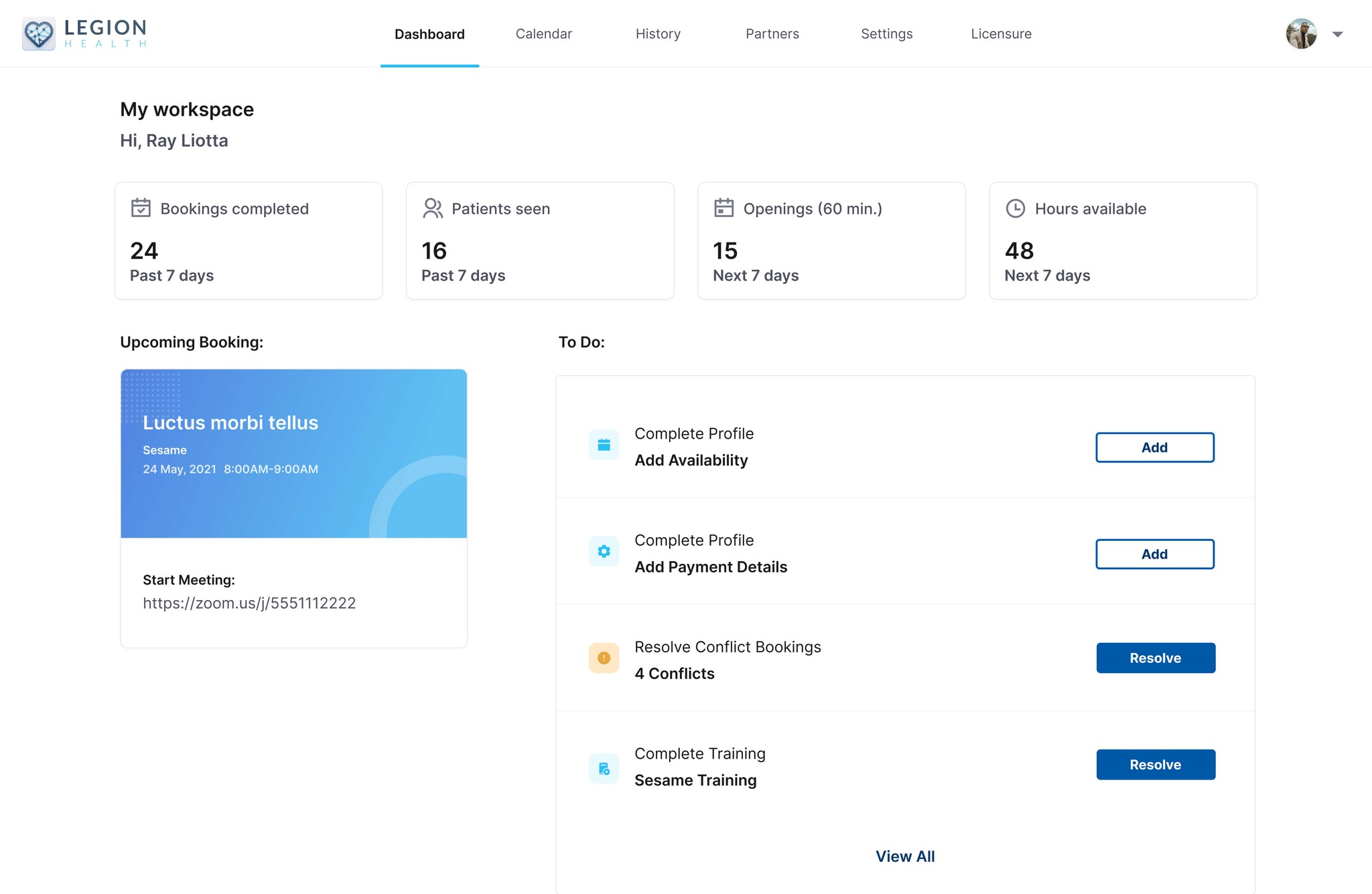
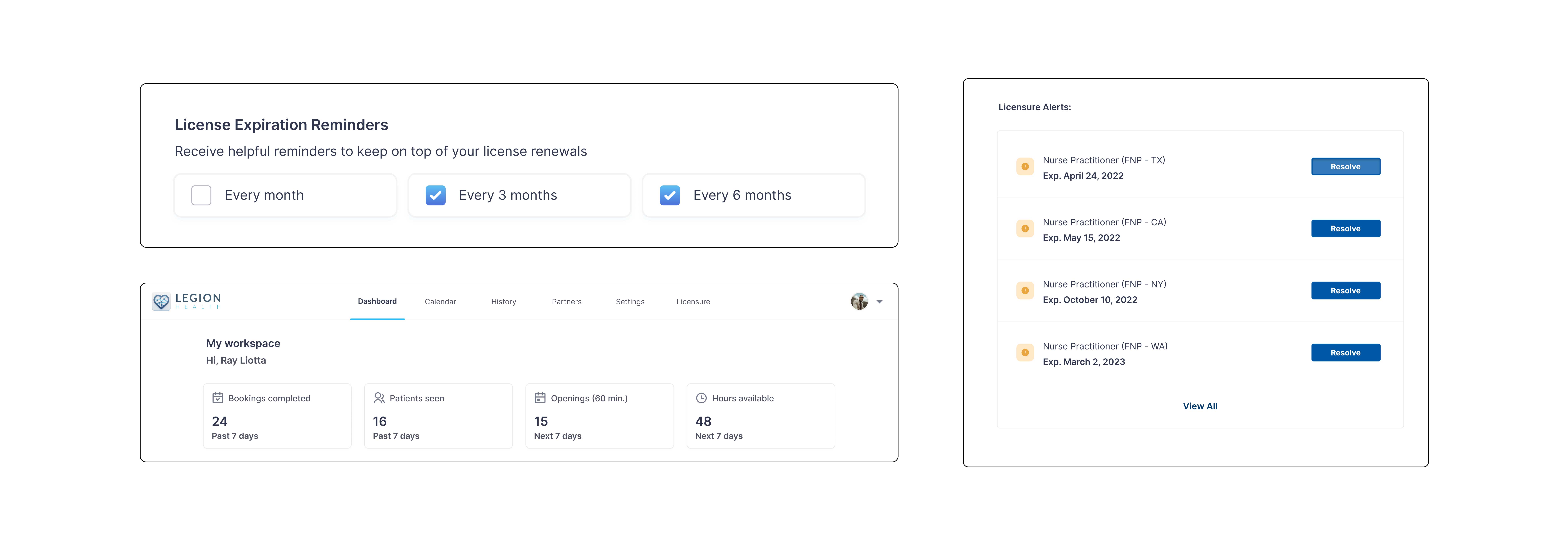
01 CLINICIAN DASHBOARD AND SETTINGS
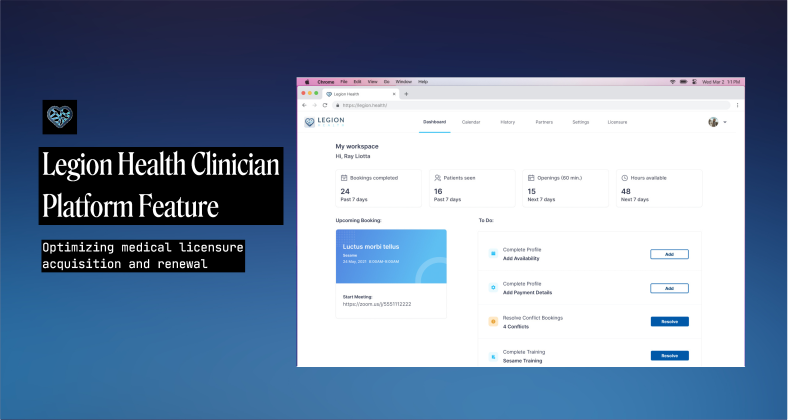
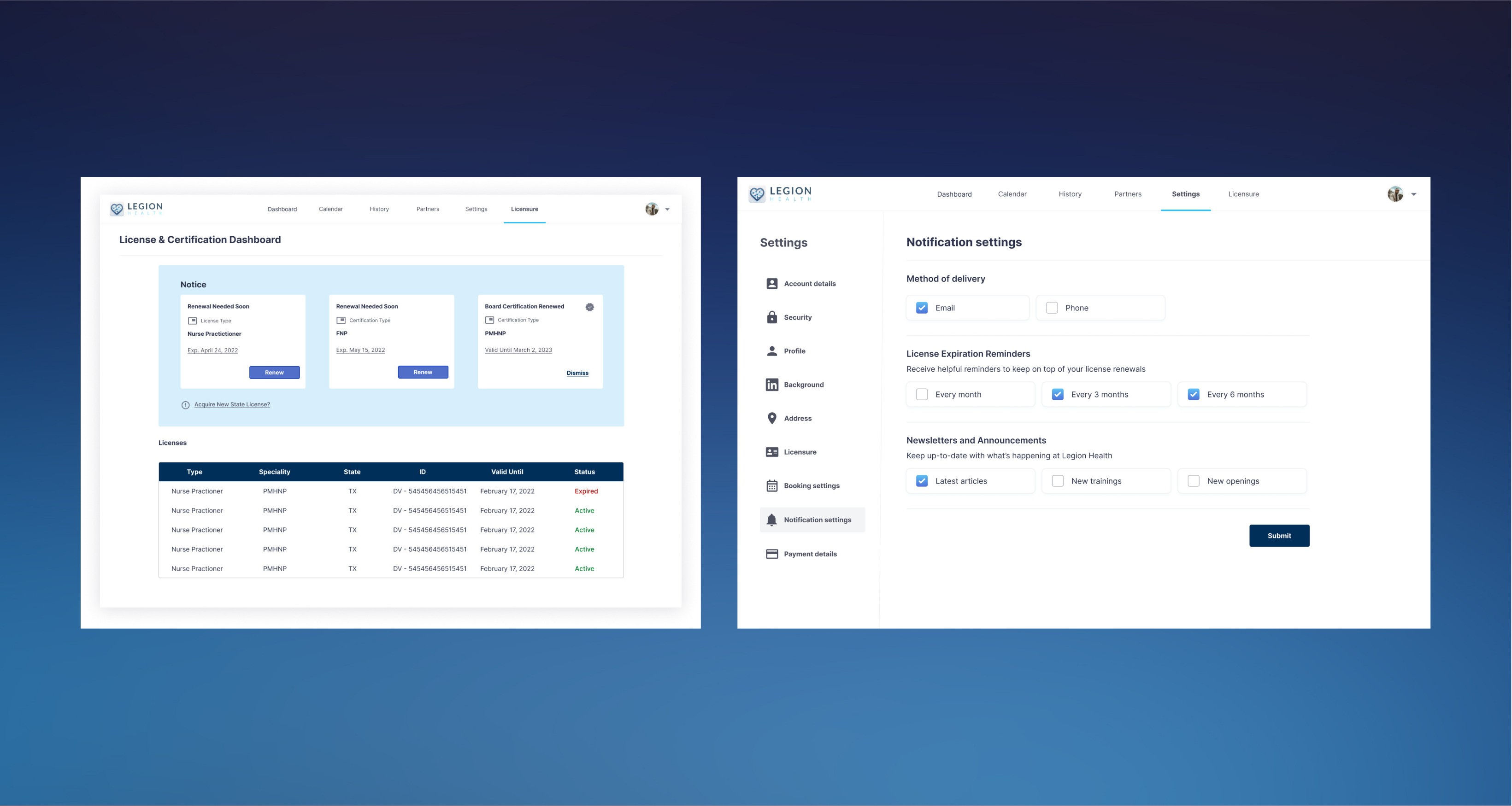
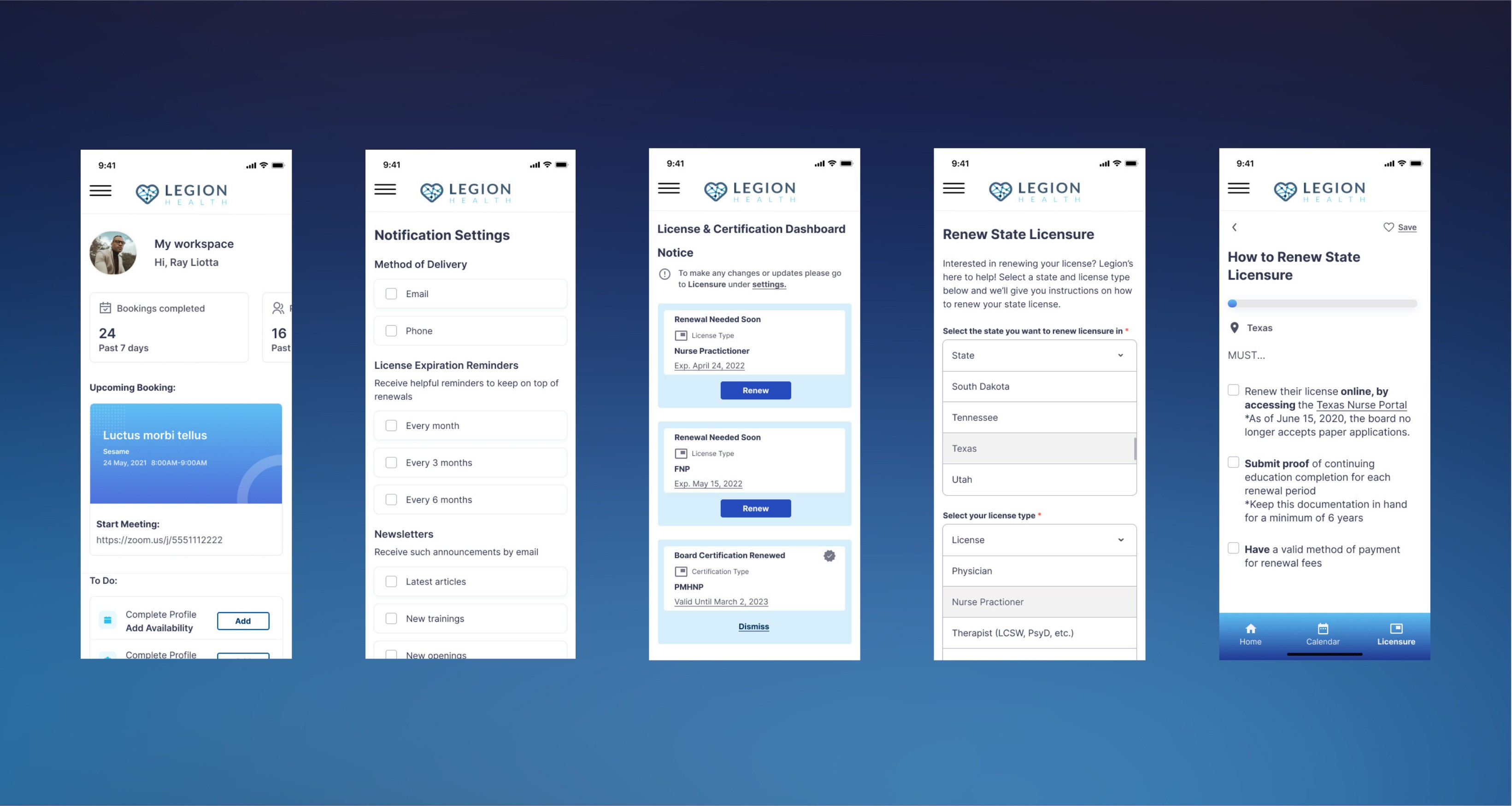
Users have a simple overview of their account that helps manage their state medical license, including licensure alerts that redirect them to the central license page. They now also have the option to adjust delivery methods and alert frequency through settings to track expiration dates.
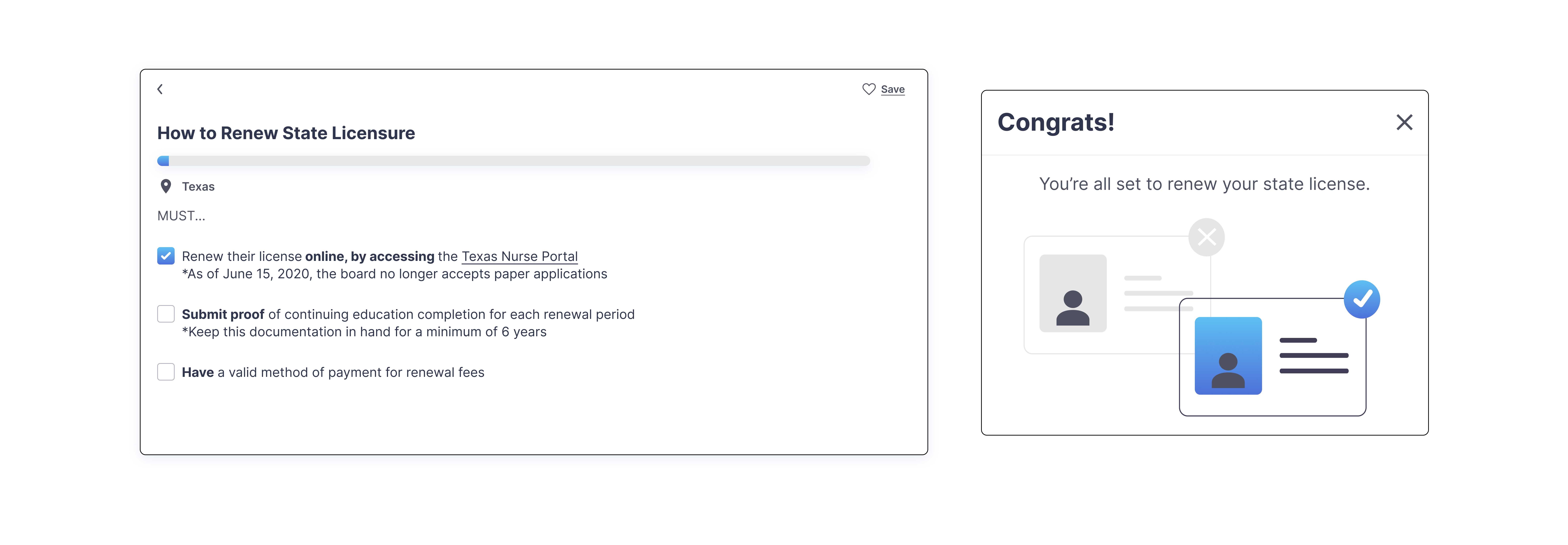
02 CONSOLIDATED REQUIREMENTS
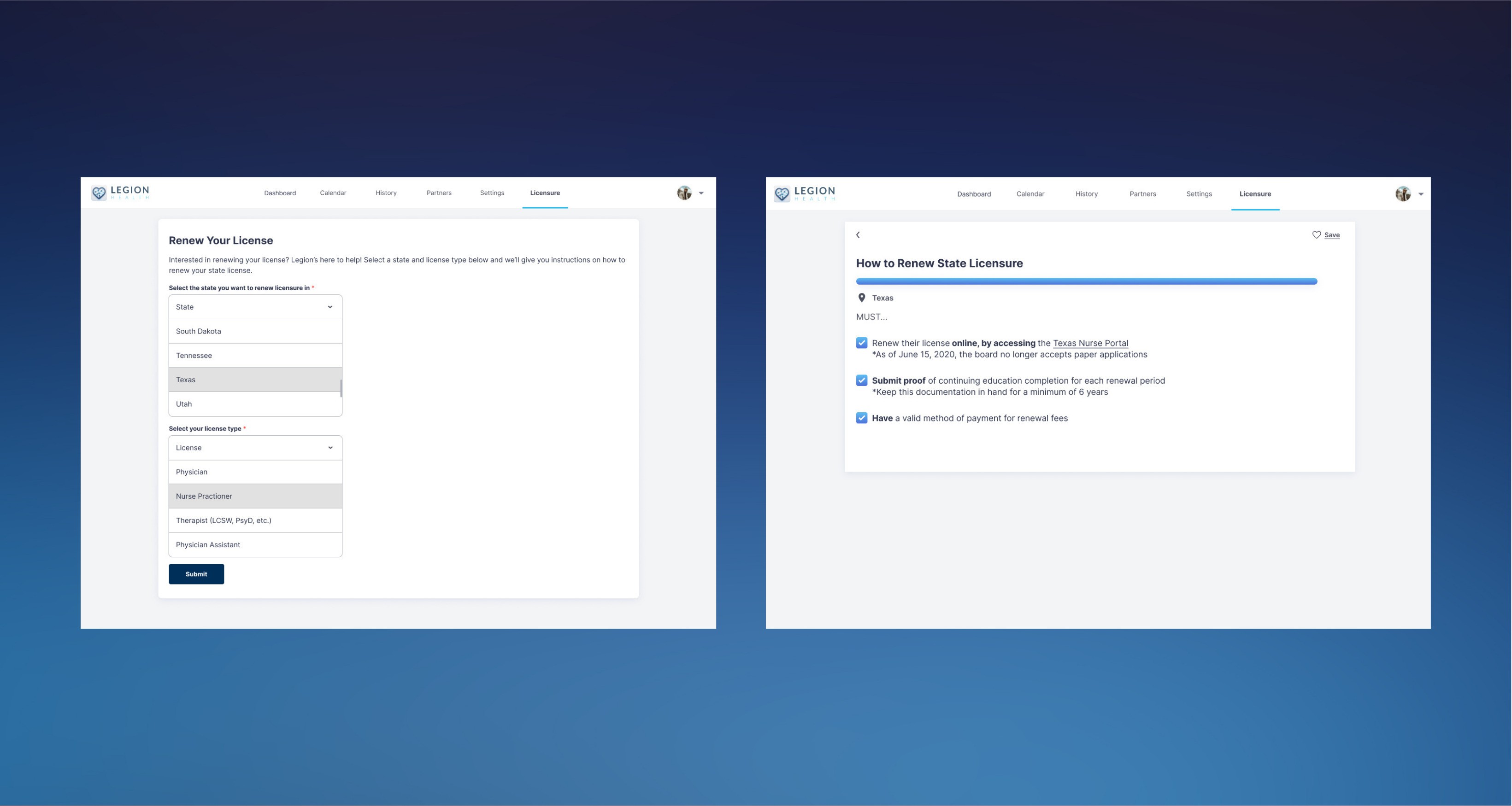
All state and licensure requirements can now be found and completed through Legion's platform with the checklist feature, including hyperlinks that directly take the user to the board site.
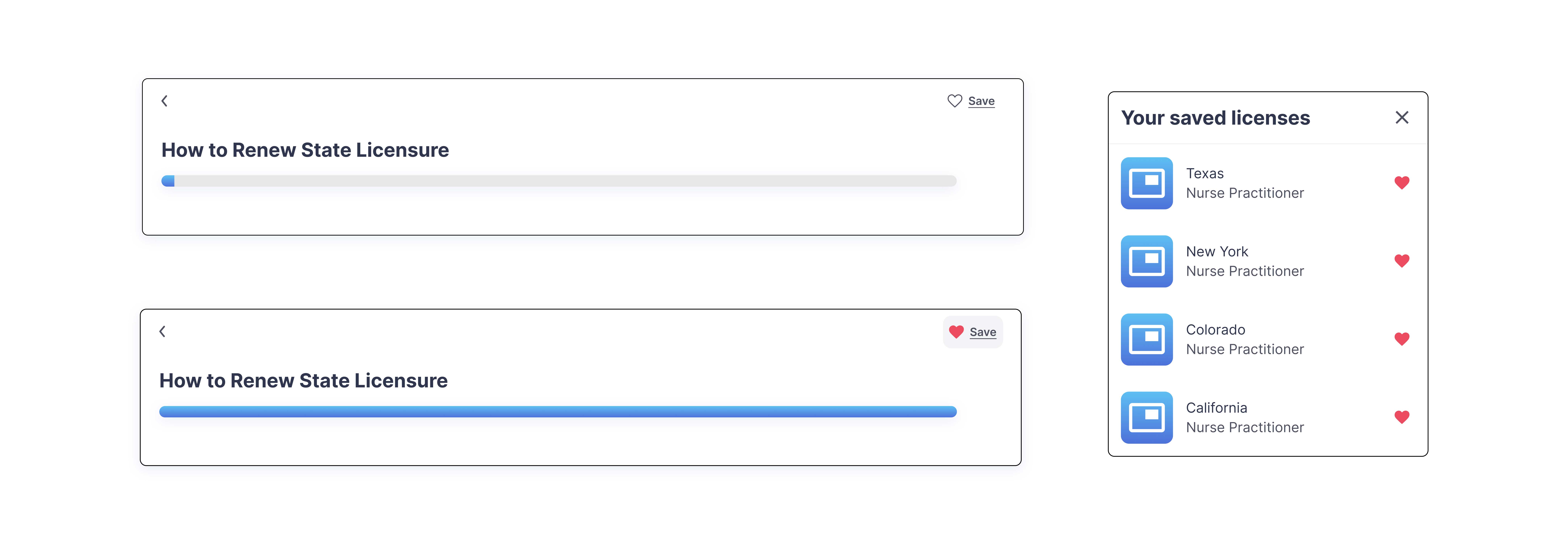
03 PROGRESS BAR AND SAVE OPTION
Users can track the progress of their license through the progress bar and also have the option to save their application.
01
DISCOVER
Getting started…
UNDERSTANDING THE LEGION PLATFORM AND MEDICAL ACQUISITION/RENEWAL PROCESS
To get a solid idea of the typical licensure acquisition for clinicians and project’s expectations, we provided a set of questions for the team at Legion to address.
❓ SAMPLE OF CLIENT QUESTIONNAIRE
Q1: How do clinicians currently submit licensure changes to Legion? What information do they have to provide?
Q2: How many weeks in advance does a practitioner need, in order to renew their applicable license?
Q3: How does the client envision clinicians using Legion to manage license(s)? OR What features could help clinicians manage license(s) through Legion?
Q4: In addition to managing license(s), what other features would benefit the clinician experience with Legion?
💎 SUCCESS MEASURES AND OUTCOME
Validate the scale of interest with clinicians (ie. increasing the waitlist for the platform)
Provide a high-fidelity mockup and prototype that can be implemented on their current site
Retain clinicians not yet seeing patients on Legion Health by providing valuable experiences
Digging deeper...
HEURISTIC EVALUATIONS and RESEARCH
Based on the information that we gathered from the Legion team we moved on to understanding the existing flow for obtaining a medical license, which we found to be a struggle. Let’s say you need to obtain a new license in a new state. With the current process, you would need to research the board requirements for various licenses and the state requirements individually. This is a time-consuming and lengthy process, especially if you have numerous licenses in different states.
📋 DIFFERENT STATE REQUIREMENTS
California: renews every 2 years and requires 50 hours of continuing medical education
Texas: renews every 2 years and requires 20 hours of continuing medical education
Oregon: renews every 2 years and requires 30 hours of continuing medical education
Illinois: renews every 3 years and requires 150 hours of continuing medical education 60 Physician's Recognition Award Category 1 Credits
Identifying core features...
VALUE OF PRODUCT
After getting a clear idea of the platform and the additional features we needed, the team created user stories to help us prioritize the most important aspects. I focused on the users who wanted to view all their licenses in one place and assisted the users who wanted to know how to renew a license before it expired.
CONTROL
Know in advance when licenses and certifications are about to expire so they can be renewed in time
EASY MANAGEMENT
Be able to easily view all my license from one place (central home)
GUIDANCE
Know how to get a new license (e.g. in a new state)
02
IDEATE AND DESIGN
Low-fidelity wireframes
INITIAL DESIGNS AND INSPIRATION
For starting the central home page sketches, I drew inspiration from established tele health platforms and incorporated Legion’s existing features. The result was a straightforward and easy-to-navigate interface. The renewed page introduced a helpful checklist for clinicians. We began with desktop wireframes as Legion was primarily a web platform while ensuring consistency in typography and icons with the client’s platform, and moved on to mobile responsive designs.
Feedback
DESIGN ITERATION
We presented the wireframes to the stakeholders and made iterations based on their feedback which were
Update the navigation menu bar to the top to match Legion’s site update
Change the licensure page from one to two separate pages due to different flow and experiences
Add more context and explanations to the renew and acquire new license page to guide the clinicians through the process (checklist feature)
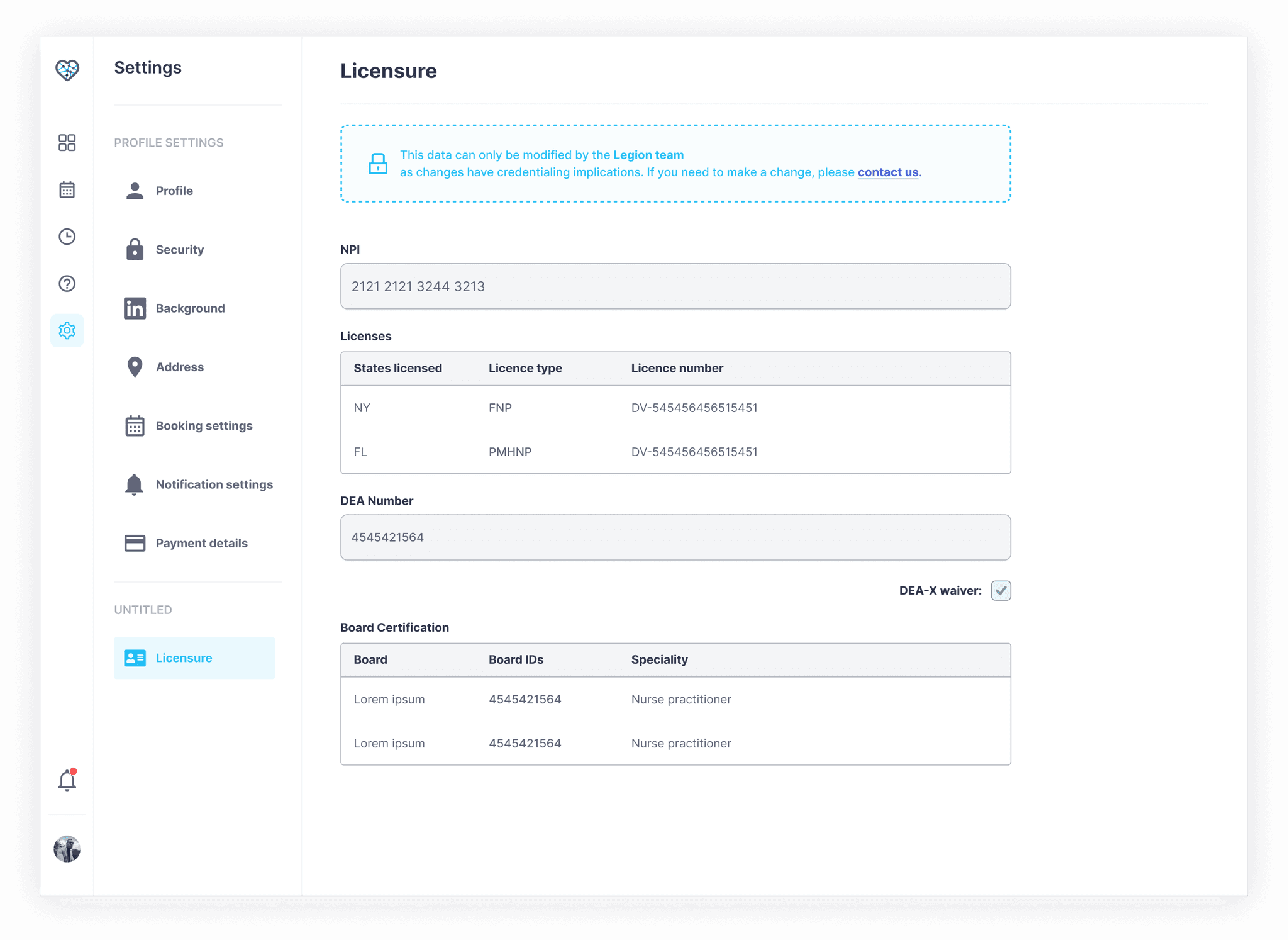
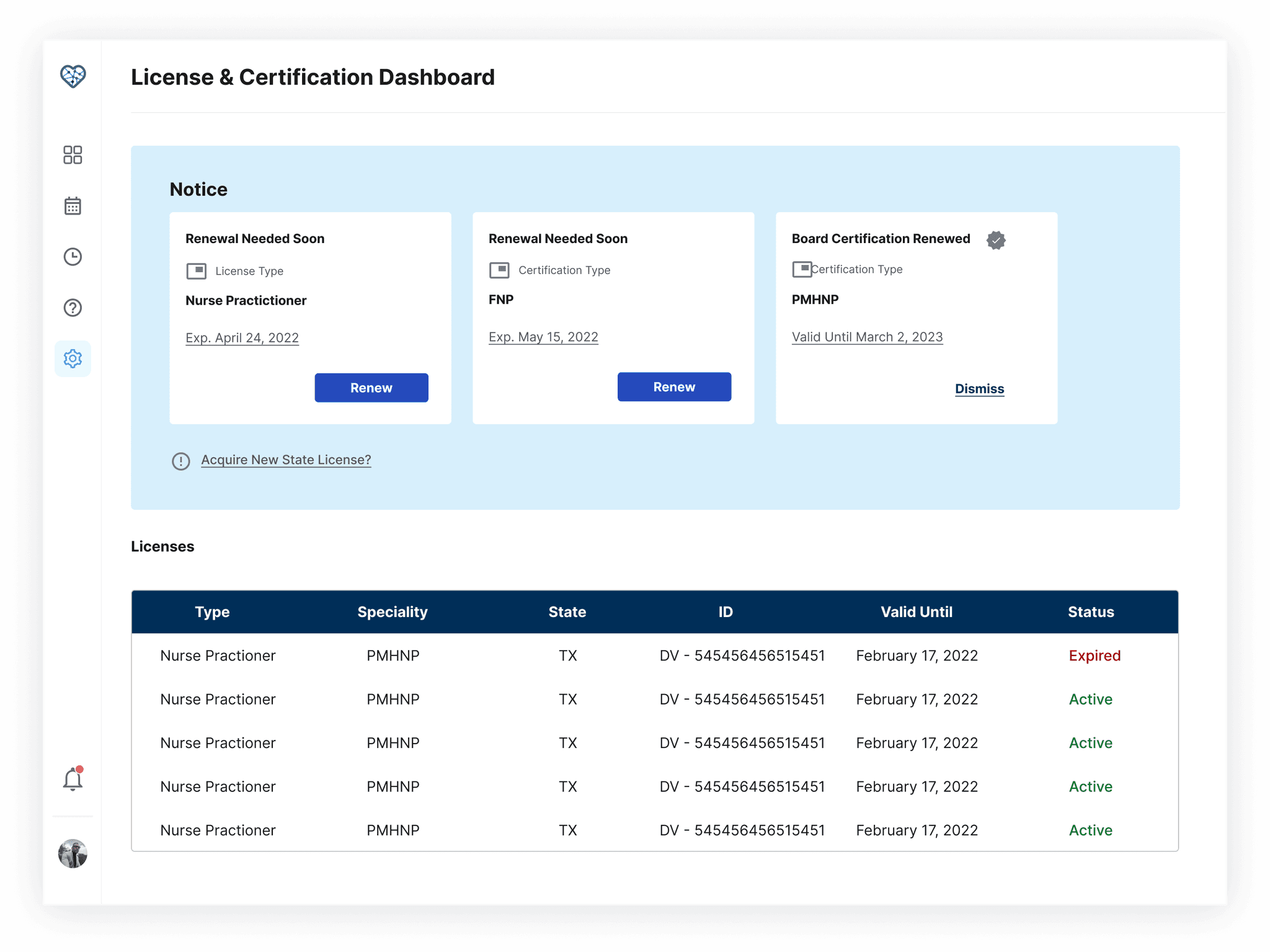
Before:
Navigation bar is tucked to the left side of the screen to stay consistent with the rest of the site
Renew and acquire new licenses were part of one flow
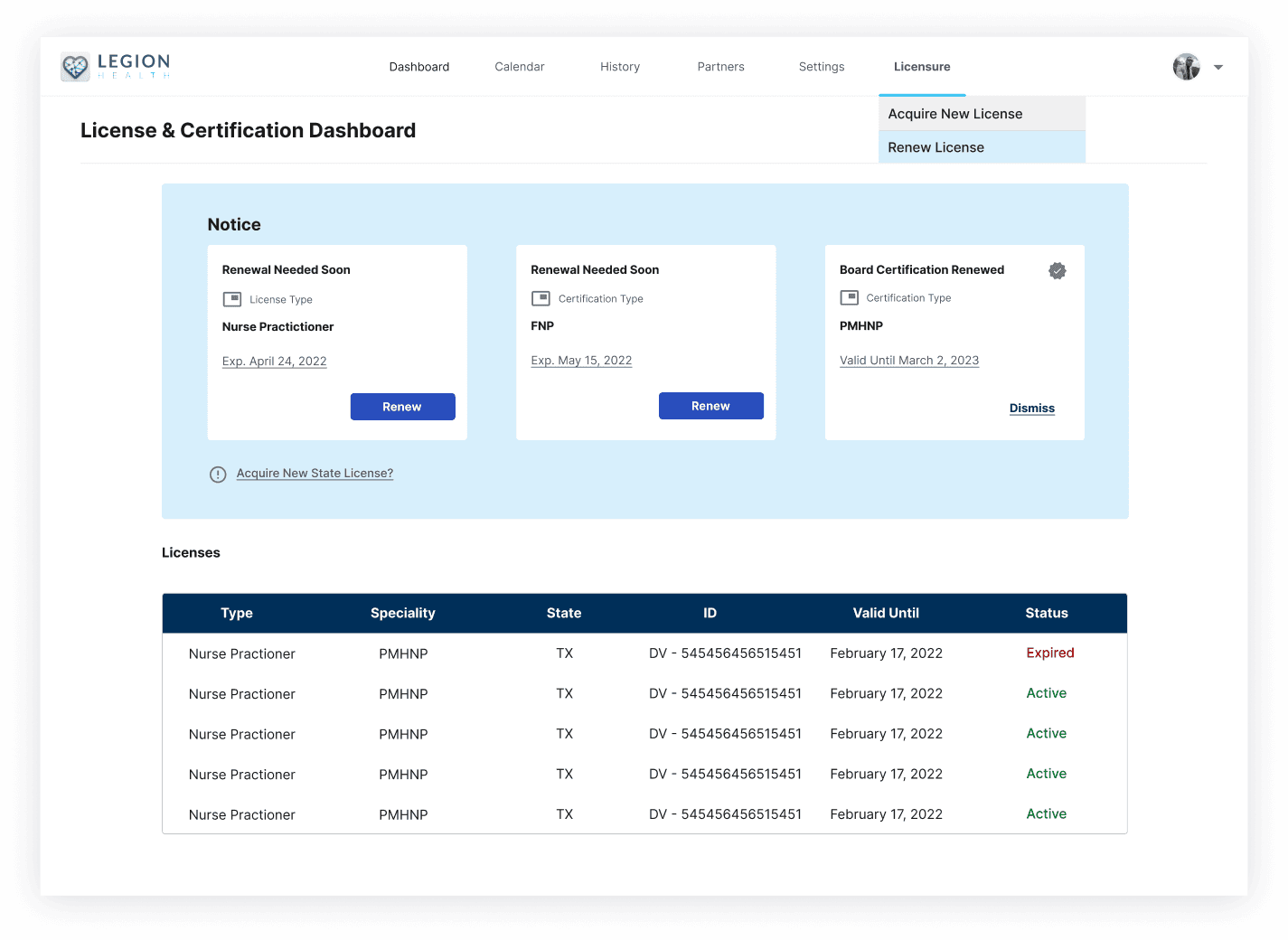
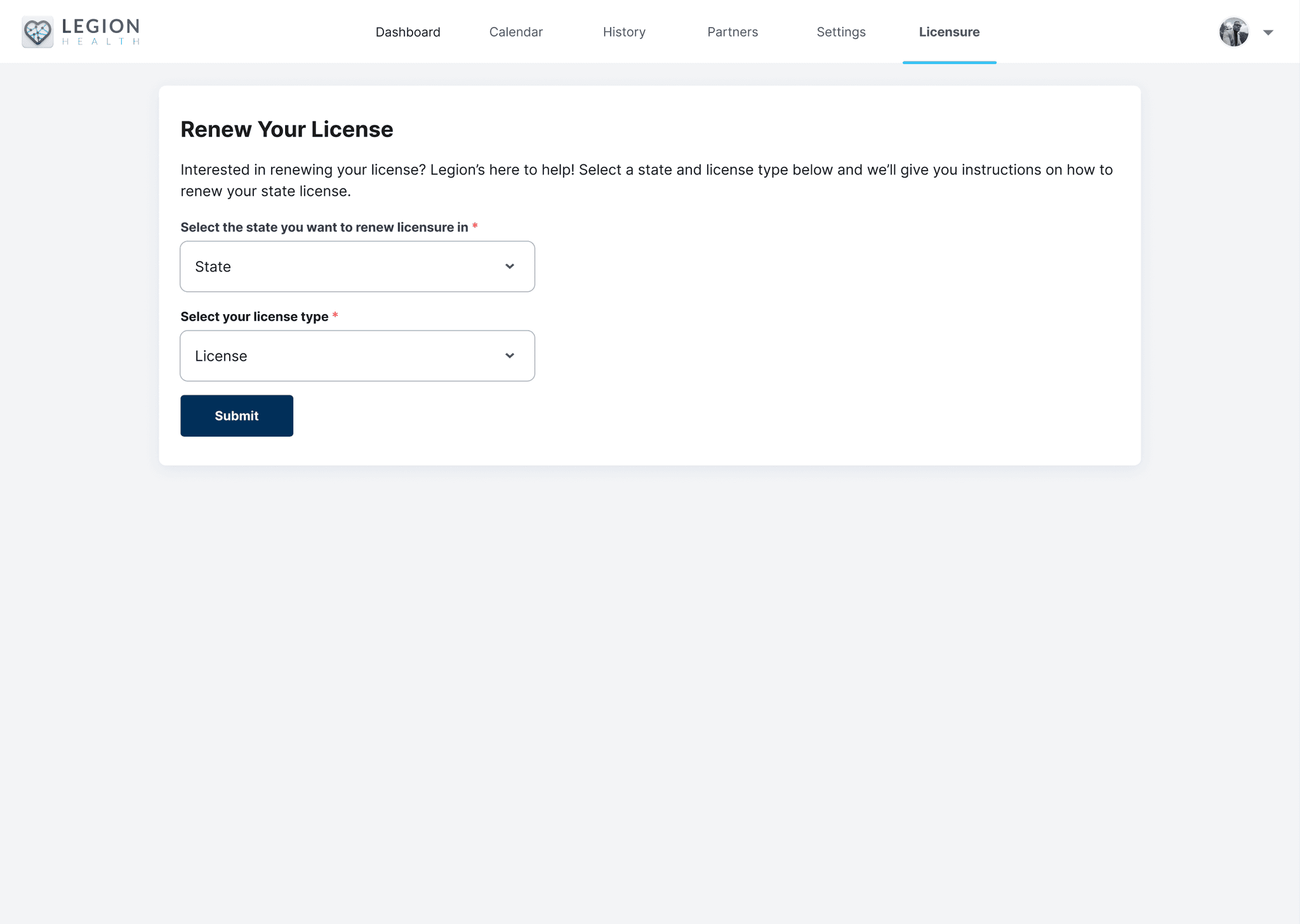
After:
Navigation bar has been updated to the top to match their new site update
Renew and acquire new license are now separate flows to prevent confusion
03
TEST SYNTHESIS AND FINAL DESIGN
Time to put the design to the test
GATHERING DATA FROM USER TESTING AND FINALIZING DEVELOPER HANDOFF
We conducted unmoderated remote usability testing on both desktop and mobile prototypes using UserTesting.com, with 5 participants completing 5 structured tasks each. Testing was led by our team of 4 UX designers and findings were compiled into a formal usability report presented to Legion Health's leadership team including the COO.
All participants successfully completed every task across both platforms with no Critical or Major issues identified. All findings were rated Minor severity, confirming the core navigation and feature flows were intuitive and ready for development.
Checklist clarity was the most consistent piece of feedback across both platforms. Participants understood the renew and acquire flows but were unsure whether they were submitting information directly to Legion or to their state licensing board. We recommended adding tooltip guidance to set clearer expectations before linking out.
Settings navigation on desktop needed two adjustments: the profile dropdown needed a settings shortcut, and clicking Settings should open to Account Profile rather than Notification Settings by default.
Mobile hierarchy needed one key change: Licensure was moved to the top of the side menu since it was the most accessed section, and confirmation states were added after key actions like saving notification preferences.
04
REFLECTION
Looking back...
IT'S ALL ABOUT BALANCE
Collaborating with Legion Health was both exciting and humbling. Working with a Y-Combinator-backed company early in my career pushed me to take the research phase more seriously than I had on previous projects. Since none of us were practicing clinicians, we couldn't rely on intuition. We had to actually understand how medical licensure works across different states before we could design anything meaningful. Researching state-by-state renewal requirements, submission processes, and expiration timelines took significant time upfront, but it was what made the final designs credible to the clinicians we were designing for.
KEY LESSONS LEARNED
Deep domain research is non-negotiable when designing for specialized users. Understanding the actual complexity of multi-state licensure was what allowed us to make informed decisions about information hierarchy and the checklist flow rather than guessing at what clinicians needed.
WHAT I'D DO DIFFERENTLY
Midway through the project, stakeholders raised the idea of gamifying the licensure process to make it feel less tedious. I interpreted that as an opportunity and suggested the checklist format to give users a sense of small, trackable progress as they worked through requirements. In hindsight I would have explored this direction earlier and more deliberately, prototyping and testing a few different approaches rather than landing on one solution under time pressure.
IMPACT
The final designs gave clinicians a single place to track, renew, and acquire state licenses, reducing a process that previously required navigating multiple state board websites individually. Findings and recommendations were formally presented to the Legion Health leadership team including the COO.